


Published: Oct 30, 2025 | Last Verified Against State Boards: Oct 30, 2025
Finding the right continuing education courses is a critical step for millions of Americans, whether it’s to maintain a professional license, gain a new certificate, or simply advance in their career. These specialized education programs are the backbone of lifelong learning, providing the focused skills and knowledge needed to stay competitive in a rapidly changing world.
Unlike traditional degrees, continuing education is designed to be flexible, targeted, and accessible. It serves a wide range of individuals, from a licensed nurse or social worker who needs CE credits to a management professional seeking to master a new technology framework.
This guide will serve as your central hub for understanding what continuing education courses are, what types of programs are available, who needs them, and how to find the right online or in-person education for your specific goals.
What Are Continuing Education (CE) Programs?
Continuing education (CE), in its broadest sense, refers to any post-secondary education or training you pursue after your formal schooling. Continuing education courses are the individual classes or modules within these programs.
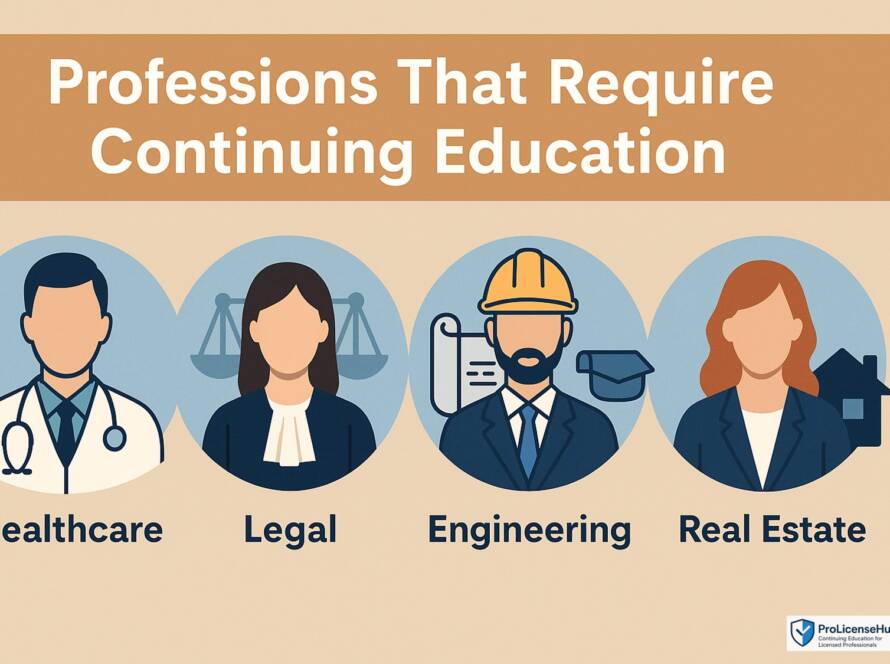
For many professionals, CE is not optional. It is a mandatory requirement to maintain a state license or professional certification. In these cases, continuaction education ensures that individuals in fields like healthcare, engineering, and finance stay current with the latest laws, ethical standards, and technical skills.
However, a huge portion of continuing education is voluntary, focusing on professional development. These are programs people take to get promoted, make a career change, or become more effective in their current role. This can include anything from online management seminars to complex technology certificate programs.
Types of CE Courses & Classes
Continuing education isn’t a single “thing.” It’s a broad category that includes many different types of education offerings. Understanding the different programs is the first step to finding the right fit.
1. Professional License Renewal Courses
These are the most common mandatory CE programs. They are specifically designed to meet the requirements of state licensing boards.
- Who they’re for: Licensed professionals like nurses, engineers, land surveyors, counselors, psychologists, and social workers.
- What they cover: These education classes often focus on mandatory topics like state laws, ethics, patient safety, or new clinical standards.
2. Online Certificate Programs
These are structured programs that provide deep knowledge in a specific area, resulting in a certificate of completion. They are a popular choice for career changers.
- Who they’re for: Anyone looking to gain a new, verifiable skill without a multi-year degree.
- What they cover: Topics are often technical or business-focused, such as project management, digital marketing, data analytics, or a new technology stack. Many university and college sps continuing education departments offer these.
3. Professional Development & Skills Training
This is a broad category of non-credit courses focused on a single skill.
- Who they’re for: Any professional looking to improve at their job.
- What they cover: These classes can range from “soft skills” (like leadership or communication) to “hard skills” (like mastering a new software or business analytics tool). These education certificates are great for a resume.
Who Needs Professional Development?
The audience for continuing education courses is incredibly diverse, but it generally falls into three main groups.
- Licensed Professionals: This group must take education to stay licensed. This includes everyone from a nurse or counselor to a social worker or public accountant. They are the core audience for mandatory CE programs.
- Certified Professionals & Technicians: This group may not be licensed by a state, but they are certified by a professional body. A project management professional (PMP) or an IT technician with a CompTIA certificate must earn continuing education units to keep their certification active.
- Career-Driven Individuals: This group takes courses for growth. They may be a business manager learning new leadership techniques, a marketing specialist studying a new technology platform, or an associate-level employee taking online classes to qualify for a promotion. This is the heart of lifelong learning.
How to Find the Right Education Programs
With thousands of online programs to choose from, finding the right one can be daunting. Use this simple framework to make your choice.
- Identify Your Goal: Why do you need this education?
- Licensure: Your goal is compliance. Your only focus should be finding programs explicitly approved by your state licensing board.
- New Career: Your goal is a certificate. Look for certificate programs from a reputable university or college that are respected in your target industry.
- New Skill: Your goal is knowledge. You have the most flexibility. Look for online courses with high ratings and expert instructors.
- Verify the Provider: Not all education is created equal. For licensing, you must use a board-approved provider. For career growth, a certificate from an accredited university holds more weight than one from an unknown source.
- Compare Formats: How do you learn best?
- Online On-Demand: The most flexible. You study at your own pace.
- Online Live Webinar: A good balance. You get interaction with a live instructor from home.
- In-Person: Best for hands-on skills or networking.
The Future: Lifelong Learning and New Skills
The world of education is no longer defined by four-year degrees. The future is about lifelong learning through accessible, online continuing education courses.
The most rapid growth is in technology and management. As automation and AI change the business landscape, the most valuable professional skills are the ones that are constantly updated. Online education platforms and certificate programs are the new standard for keeping your career on track.
This shift to flexible online education programs means that your career development is now in your hands. You can study a new coding language, get certified in a new project management methodology, or master a new technology platform – all from your own home.
Your Journey Starts Here
Continuing education courses are your tool for career maintenance and growth. Whether you are a licensed professional needing to renew your license or a motivated individual looking to get ahead, the right education programs are waiting for you.
Start by exploring our in-depth guides for licensed professionals to find the specific programs and providers approved for your state and your career.


1 Comment
Rob
Thanks for sharing. I read many of your blog posts, cool, your blog is very good.